©2020, MJ Ostrander

Author’s note: I had intended to make this second part of a series about the devastating emotional effects on social media since 2016. But we staff writers are a fickle bunch and are known to change our minds. Ultimately, I questioned discussing how the Whitehouse and The Kremlin used and continues to use us all. The irresponsible spreading of fear and the levels of hatred expressed online is devastating and exhausting. The great division in this country was created by mainstream media and perpetuated by social media. I don’t want to talk about it. Unless I change my mind. So there. MJ
I thought about my friend Laurie recently. She died in the spring of 2016 from a heroin overdose. She was forty-eight. She was found cold and unresponsive by her roommate. Another woman, a new neighbor, was found in the same state in the house. None of us had ever heard of the neighbor. The man who sold it to them was eventually caught, tried and convicted of manslaughter. I will never know what drove her to its arms. What I do know is that in the year prior to her death her father and one of her brothers also died, both from alcohol-related causes. In the thirteen years I knew her, she had a boyfriend who spent more time in the county jail than out of it on alcohol-related charges.
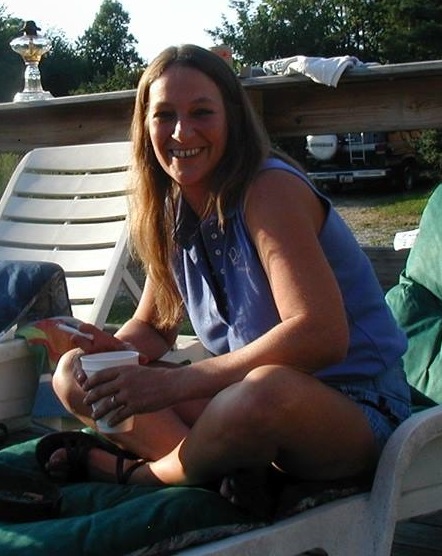
Laurie was an alcoholic herself. She was on a bad road for a long-time. People who knew her far longer than me had grown tired of her showing up at their homes in bitter tears and rage over her latest crisis. Advice had been given many times by many people. She never took any of it. I implored her to see the wisdom in pulling up her stakes and move to Arizona, a place she visited often and seemed to love. With her cleaning business, she could have flourished anywhere. She could have escaped being used and abused by her brothers and being her father’s stooge. But their hold on her was too strong for her to break. So it broke her.
However troubled and flawed, Laurie was what most people would consider a real friend. She was loyal, honest, funny, caring and trustworthy. I used to say that if you left ten thousand dollars in her care, every penny of it would be there when you wanted it back. She loved animals, Tom Petty, rural life and gardening. She gave me a job when I desperately needed one. Two times after her death, I drove past the house she had rented. I remember the sting of grief to see the place vacant. The front porch, once burgeoning with houseplants, barren. You could see her vegetable garden from the road. She didn’t get around to clearing out the lifeless yellow-brown stalks and vines from the previous year. The sight made me angry. Oh, Laurie. You stupid, stupid girl! I loved her, but no one could have saved her. She had led an overburdened, heartbreaking life. She was a good friend. And she was real.
Facebook began as a way for Harvard students to keep in touch with other Harvard students, most of whom I suspect knew each other offline. According to Zephoria.com, a digital marketing site, there are now 2.37 billion members. More than half of us sign on every day. There are approximately eighty-three million fake profiles. Five new profiles are created every second.
One hundred and forty-two are on my list of Facebook people. I have no clue how I acquired many of them. I topped at around two hundred fifty. I would occasionally run through the names and remove those with whom I have little to no interaction. Now and then I’ve clicked the click on the obnoxious, the overzealous holy rollers and the nut rolls.
I did not use the term “friend” in the preceding paragraph for a reason. Don’t get me wrong. It’s not that most aren’t good people living in difficult times. I’ve had innumerable rewarding conversations via the written word. I get the fundamentally inaccurate term as it applies to those I will never meet offline. Aside from a handful of family members and offline folks back in Ohio, no one I interact with on social media could meet my offline criteria as a friend. They would not help me move, visit me if I were dying, pay my bail if necessary or clean my toilets. Nor could I do the same for them. It’s a mutually cordial yet superficial arrangement. It took me nine and a half years to figure out that they aren’t Laurie.
All our senses come into play when interacting with someone standing in front of us, allowing our brains to use that marvelous ability we call intuition to engage or avoid another. This process is vital in allowing us to make sound social safety decisions. We can only use vision on social media, an overlooked detail that creates a swarm of problems. Social media also compels us to forge connections in an unnatural way. We become acquainted from the inside out. We lack the tools by which we make healthy judgments.
The most emotionally hazardous situations stem from users with various forms of neurosis and sometimes psychosis. Some of these people display blatant symptomology and vision alone is enough to sidestep them. Others are far more subtle. It’s these latter personality types that can do us damage and therefore warrant some observation.
From time to time, you’ll see a cryptic post. “Today was the worst day of my life.” “Fuck the world.” In a matter of minutes, they will have a stream of comments urgently asking what’s wrong, are you okay, tell me what happened. You can spend huge amounts of time talking them down. Eventually you can sign off hoping you’ve somehow helped this person only to lose sleep wondering if they’re okay. Two days later, they’re back at it. If you want to help, stop feeding them. Tell them straight up their drama solves nothing and that they may need professional help. Save your keyboard for less hyperbolic scenarios. Better still, save your time and energy to work on your own problems.
There are millions of members in genuine financial trouble. It’s a house of cards economy and most of us are feeling it. Some have disabilities and life situations that keep them spinning their wheels. But others never seem to do anything to improve their lot. Most just genuinely need verbal support. But some are on the take. They typically have a high number of people on their “friend” list. They are generally inoffensive, have few opinions and avoid any controversial topics. But they will air their misery frequently. Having known hard times, I was particularly vulnerable to these scenarios. Resist the urge to be a do-gooder.
Both examples given above have the commonality of manipulation. But by far the worst type of manipulator will flatter you, agree with you, stroke your ego. They will court your sympathy, praise your intellect or use your time and heart by any means they learn works on you. They will be your BFF. Until you disagree with them or call them on their bullshit. Then watch them come undone. Most are pathological narcissists and I can’t overstate the need to block them. They will use any tactic that works against you. Learn to spot them early.
Laurie was never on Facebook. If I had ever complained to her about social media, she would have given that cackling laugh of hers and said, “Fuck that shit!”
Next Up: Part 3
 This Carbon Based Life
Leave a comment